Seasonal guide · 8 min read
When to see the Great Migration
The migration is a continuous circuit, not a date in the calendar. Here is where the herds usually are, month by month, and what that means for where you should sleep.
By the Citrus Tour Safaris team
It is a circuit, not an event
Roughly two million wildebeest, zebra and Thomson's gazelle move continuously through the Serengeti–Mara ecosystem, following rainfall and the grazing it produces. They do not set off on a date and they do not arrive on one. Any operator who tells you the migration will be in a particular place on a particular day is describing a probability as though it were a booking.
What this means practically is that the question is never 'when should I go to see the migration?' but 'where should I be for the month I can travel?'. Almost every month of the year has an answer, and several of them are better than the famous one.
Late January to March: calving on the southern plains
The herds gather on the short-grass plains of the southern Serengeti around Ndutu, where volcanic ash blown from the Ngorongoro highlands has produced grass unusually rich in calcium and phosphorus — exactly what a lactating wildebeest needs. Several hundred thousand calves are born within a few weeks, with the peak usually in February.
This is, in our view, the most reliable of all the migration experiences, precisely because the herds have a reason to stay put. It also produces the most concentrated predator activity of the year: lion, cheetah, hyena and occasionally wild dog all working the edges of the herds. Parts of the Ndutu area permit off-road driving, which for photography changes everything.
The trade-off is that camps here are seasonal and mobile, availability is tight, and you need to book well ahead.
April and May: the long rains
The herds begin moving north-west, and the long rains arrive. Many camps close, tracks become difficult, and game viewing is less predictable because water is everywhere and animals disperse.
It is also the cheapest and emptiest time of year, the landscape is spectacularly green, and if you are relaxed about rain and flexible about sightings, the value is real. It is not the right window for a first safari built around the migration.
June and July: the western corridor and the Grumeti
The herds push west and north through the Grumeti area. The Grumeti River crossings are less famous than those on the Mara River but they happen, and the crocodile here are formidable. Numbers of visitors are lower than they will be a month later.
July to October: the north and the Mara River
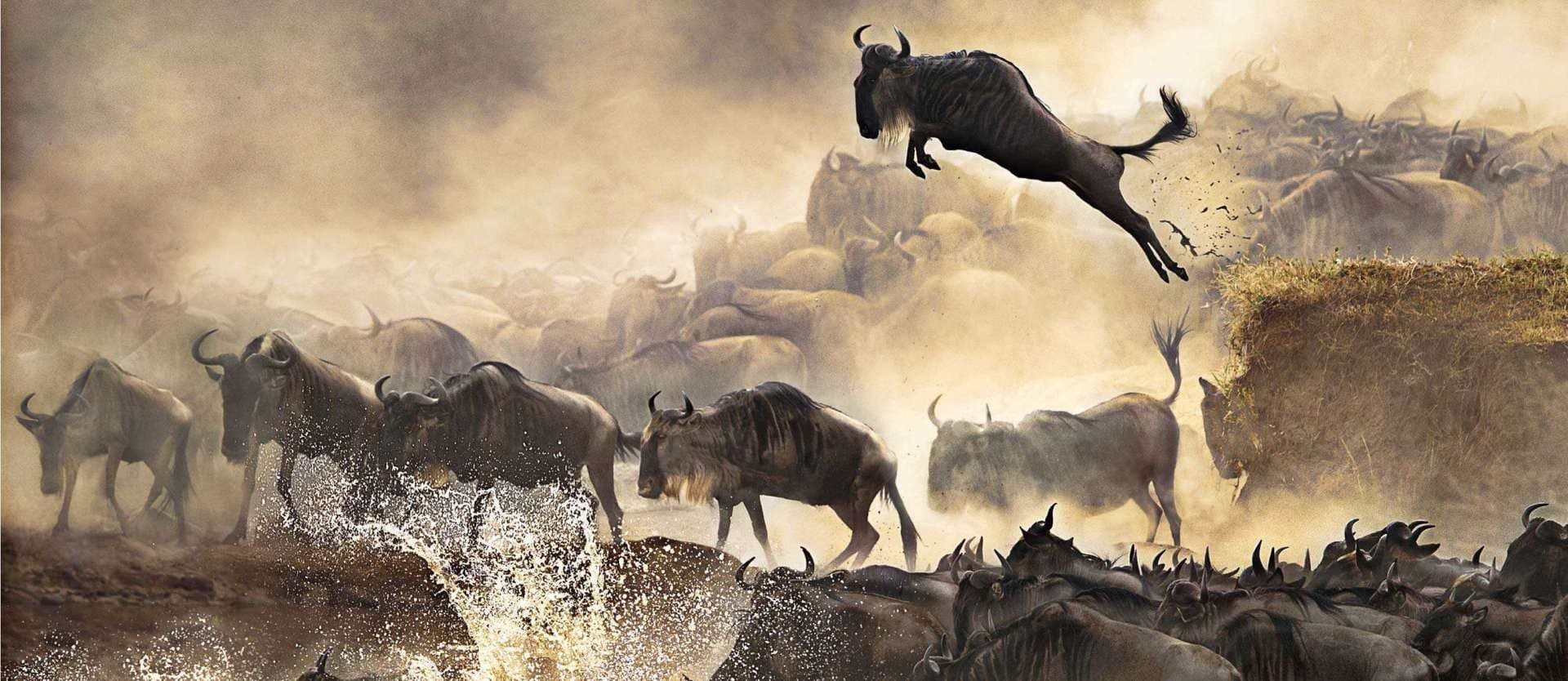
This is the period everyone has seen photographs of. The herds occupy the northern Serengeti and cross into Kenya's Maasai Mara, and the Mara River crossings take place — sudden, violent and over in minutes, with crocodile working the current and the herds pouring down banks they have hesitated at for hours or days.
Two honest caveats. First, it is the busiest and most expensive period of the year in both countries, and popular crossing points attract a great many vehicles. Second, crossings are genuinely unpredictable. Herds mass at the bank and then turn away. The best any operator can do is put you in the right area, in a camp close enough to reach the river early, with enough days for patience to pay off.
November and December: the short rains and the return south
The short rains green the southern plains and the herds begin drifting back down through the central and eastern Serengeti. It is a quiet, inexpensive window with good general game viewing, and by late December the front of the migration is back on the short-grass plains where the cycle starts again.
So which should you choose?
If your dates are flexible and you want the highest chance of dramatic, concentrated action, go in February for the calving. If the river crossings are the reason you are travelling, go between late July and September, accept the crowds and the cost, and give yourself at least three or four nights in the north rather than two.
If you simply want excellent wildlife and are relaxed about the herds, almost any month works — the resident lion, leopard, cheetah, elephant and buffalo of the Serengeti and the Mara are there all year, and the quieter months often produce better big-cat viewing because there are fewer vehicles at each sighting.