Skip to content
Citrus Tour Safaris
Giraffes browsing among acacia trees
Mid-range8 days · 7 nightsTanzania Top 10 research pick

8 Days Great Migration Safari (July-October) — Mid-range

A 8-day journey through Lake Manyara, Serengeti and Ngorongoro, with well-run mid-range lodges and camps at every stop. 7 nights on safari, priced on request.

Lake Manyara - Central & Northern Serengeti - Ngorongoro - Tarangire

About this safari

The route opens in Lake Manyara — groundwater forest beneath the Rift escarpment — and works through 3 further destinations over 8 days. It stays within Tanzania; the final proposal will confirm transfer times and the balance between travel and game viewing. Accommodation is at the mid-range standard: comfortable tented camps and established safari lodges. The balance most travellers settle on — proper beds, en-suite bathrooms and well-run lodges in good positions, without the premium that the top end of the market commands. Like every safari in this catalogue, it is priced on request rather than sold at a published rate, because park fees, permits, group size and contracted accommodation all change the figure.

Highlights

  • Time on the Mara River in the northern Serengeti during the crossing months, conditions allowing
  • Lake Manyara: tree-climbing lion, unusual behaviour seen in only a handful of places in Africa.
  • Serengeti: the Great Migration, the largest terrestrial mammal movement on earth, is resident here for most of the year.
  • Ngorongoro: the highest permanent density of large mammals anywhere in Africa, all within a contained caldera.
  • Tarangire: the largest dry-season elephant concentrations on the northern circuit, drawn to the permanent river.
  • A permitted descent onto the floor of the Ngorongoro Crater

Day by day

Your 8-day itinerary

Written out in full before you book, so you can see exactly how the days are paced and where each night is spent.

  1. Day 1

    Arusha to Lake Manyara

    This planning outline starts in Arusha and continues towards the first park; the meeting point and timing are confirmed in the final proposal. The road to Manyara passes through Mto wa Mbu, a busy market town where the produce of several climates meets in one place, before reaching the park gate at the base of the escarpment. Inside, the transition is immediate: from roadside bustle into deep, shaded groundwater forest within a hundred metres. Manyara packs an unusual amount of variety into a small area. The drive begins in dense groundwater forest fed by springs at the base of the escarpment, where blue monkey and olive baboon move through the canopy and silvery-cheeked hornbill call overhead. It then opens into acacia woodland — the classic place to scan for lion resting in the branches — before reaching the floodplain and the lake shore. The suggested standard is mid-range. Citrus will confirm the property and contracted services in writing before booking.

    Overnight: Lake Manyara

    Hippos resting in shallow water
  2. Day 2

    Lake Manyara to Serengeti

    The next leg links the two destinations, moving deeper into the Serengeti, the country shifts between short-grass plain, acacia woodland and granite kopjes rising out of the grass like islands. Your guide will use the drive itself as a game drive, and in the central Seronera area — productive year-round for resident wildlife — the sightings usually start coming quickly. The Serengeti holds one of the densest lion populations on earth, and the granite kopjes are the best place to look — prides use them for shade, vantage and shelter, and a pride draped across warm rock in early light is one of the defining images of the park. Cheetah favour the open plains where their speed counts, and leopard rest through the heat in the acacias along the Seronera river courses. The catalogue suggests a comfortable mid-range stay here. The exact lodge, room basis and meals are confirmed in the quotation.

    Overnight: Serengeti

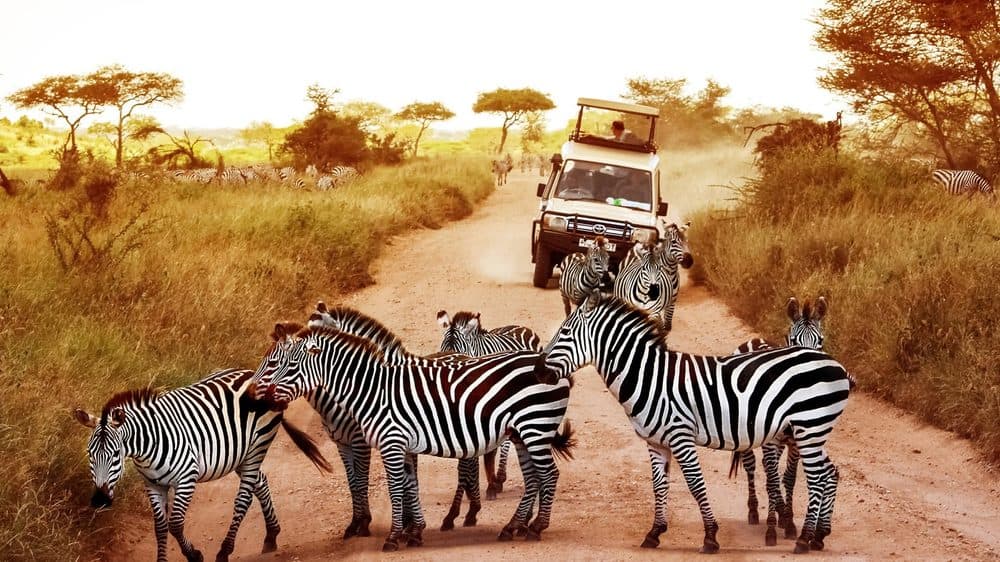
    Vast herds of wildebeest and zebra spread across open grassland
  3. Day 3

    A full day in Serengeti

    A full day in the Serengeti means covering distance, and that is no hardship. Between sightings the plains themselves hold attention — grass moving in wind, kopjes standing out of it, and the sense of space that no other park in East Africa quite matches. Your guide will usually pack lunch and stay out through the middle of the day, when many vehicles return to camp and the tracks empty. Between the large predators there is a great deal else. Bat-eared fox and serval hunt the short grass, secretary birds stride through it, and agama lizards blaze orange and blue on the kopjes. Your guide will stop as readily for a serval hunting in long grass as for a lion, and on a good day that is exactly the right call. A mid-range camp or lodge is proposed for this night, subject to availability and written confirmation.

    Overnight: Serengeti

    Vast herds of wildebeest and zebra spread across open grassland
  4. Day 4

    North to the Mara River and the migration

    Following the migration in the north means patience and long hours. Your guide will read the herds' direction of travel and the state of the grass, work the known crossing points, and be prepared to sit for a long time on the chance that a build-up tips over into a crossing. Some days deliver one of the great wildlife spectacles on earth; others deliver enormous herds and no crossing at all, which is the honest nature of it. Leaving the previous stop behind, today's drive crosses the Ngorongoro highlands and passes Olduvai Gorge, where the Leakeys' excavations revolutionised the understanding of human origins, before dropping onto the short-grass plains of the southern Serengeti. From there the road runs north for hours across country so flat and open that distance becomes difficult to judge. This outline assumes a comfortable safari stay near the route. The named property remains a suggestion until quoted.

    Overnight: Serengeti

    Wildebeest plunging down a riverbank and crossing the water during the Great Migration
  5. Day 5

    The Great Migration in the northern Serengeti

    In the northern Serengeti the days are built around the Mara River. Herds mass on the banks, sometimes for hours, sometimes for days, and the crossings when they come are sudden, violent and quickly over — wildebeest pouring down the bank into current and crocodile while the rest of the herd hesitates above. Nothing about the timing can be arranged, so the approach is to reach the river early, position well and wait. Between the large predators there is a great deal else. Bat-eared fox and serval hunt the short grass, secretary birds stride through it, and agama lizards blaze orange and blue on the kopjes. Your guide will stop as readily for a serval hunting in long grass as for a lion, and on a good day that is exactly the right call. The suggested standard is mid-range. Citrus will confirm the property and contracted services in writing before booking.

    Overnight: Serengeti

    Wildebeest plunging down a riverbank and crossing the water during the Great Migration
  6. Day 6

    Serengeti to Ngorongoro

    The next section of the circuit moves on, the drive to the crater rim gains altitude quickly, and by the time you reach the top the air is cold enough for a jacket. The rim road runs along the edge with the caldera falling away on one side, and even before descending the scale of the place is obvious: this is a complete ecosystem held inside a single collapsed volcano. The crater floor holds roughly 25,000 large animals in an area small enough to cover in a morning, and because most of them have no reason to leave, the viewing does not depend on season. Lion prides are large and well known, spotted hyena are abundant, and the Lerai fever tree forest holds some of the last big-tusked bull elephants in Tanzania. The suggested standard is mid-range. Citrus will confirm the property and contracted services in writing before booking.

    Overnight: Ngorongoro

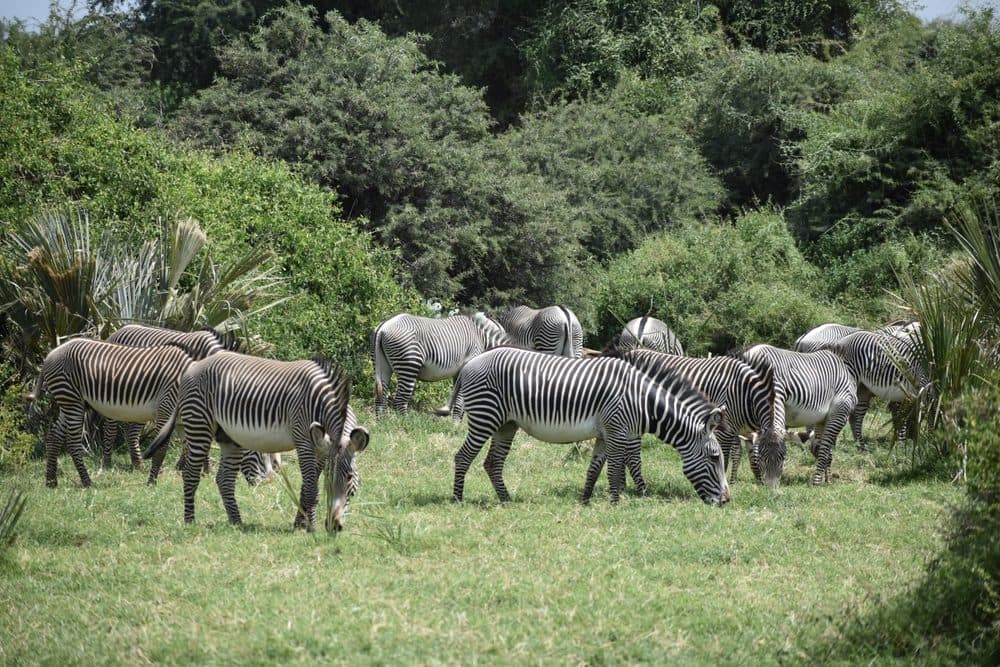
    Zebras grazing on open grassland
  7. Day 7

    Optional: ngorongoro Crater descent, on to Tarangire

    This activity is a planning option and only forms part of the day when it appears in the written quotation. The route then continues onward, the road south-west from Arusha runs through Maasai grazing land before turning into Tarangire, and the change at the gate is immediate: baobabs. They stand alone across the open woodland, enormous and strange, and they give the park a landscape that exists nowhere else on the northern circuit. In the dry season the first elephants usually appear within minutes. The catalogue suggests a comfortable mid-range stay here. The exact lodge, room basis and meals are confirmed in the quotation.

    Overnight: Tarangire

    Flamingos wading in the shallows of a soda lake
  8. Day 8

    Tarangire to Arusha

    The last morning remains flexible until the departure point and timing are agreed. The park's character comes from its trees. Baobabs — some of them well over a thousand years old, several scarred where elephants have stripped the bark for moisture — dominate the open woodland, and the late-afternoon light through them is the signature photograph of any northern circuit trip. Lion are common here and occasionally rest in the branches, as they do at Lake Manyara. The planning route returns to Arusha; the final drop-off and timing will be agreed around the confirmed onward arrangements.

    Safari ends

    A comfortable lodge bedroom

Where you stay

Suggested accommodation

Accommodation below is the suggested standard for this package, taken from the Citrus catalogue. Where an entry describes a standard rather than a named property, we confirm the exact camp or lodge with your quotation. Named properties are suggestions and are substituted with comparable alternatives if they are unavailable for your dates.

Source catalogue listing

Manyara Serena + Kubu Kubu + seasonal Northern Serengeti migration camp + Ngorongoro Serena + Tarangire Sopa

This is reproduced exactly from the catalogue. The written quotation will allocate nights and confirm each available property before booking.
Typical safari arrangements may include

These are planning examples, not confirmed inclusions for this package. Your written quotation will confirm exactly what is included.

  • A private or shared safari vehicle may be proposed, depending on the route and quotation
  • Guiding, transfers and game drives may be included where they are itemised in the written quotation
  • Park, reserve and permit costs may be included or quoted separately; the quotation will say which
  • Accommodation may be quoted at the suggested standard or at an agreed alternative
  • Meals, drinking water and taxes vary by supplier and will be itemised or described in the quotation

Costs that may be separate

The quotation will identify every separate cost before you confirm.

  • International or domestic flights and airport charges may be separate
  • Visas, travel insurance and health requirements are normally the traveller's responsibility
  • Gorilla and chimpanzee permits may be included or billed separately
  • Optional activities, drinks, tips, laundry and personal purchases may be separate
  • Any cost not addressed by the draft itinerary should be checked before the booking is confirmed
  • Optional extras on this route: a canopy walkway or night drive where available; a balloon safari where available

Important notes

  • Accommodation shown is suggested rather than contracted. The exact property is confirmed in your written quotation and may change with availability.
  • Wildlife sightings, migration movements, river crossings and clear mountain views depend on season, weather and chance and cannot be guaranteed.
  • Activities described as optional are excluded unless the written quotation expressly includes them.
  • The day-by-day text is a planning outline derived from the catalogue route. Your quotation will confirm exact transfers, activities, meals, permits and accommodation.

Before you ask

Planning questions for this route

What does price on request mean for this safari?

The catalogue sets the route and travel standard, but it does not publish a fixed price or a contracted inclusion list. Citrus will prepare a written quotation for your dates, party and rooming, showing the exact transfers, activities, accommodation, meals, fees and permits before you confirm.

Is the listed accommodation guaranteed?

No. It is suggested accommodation from the source catalogue. Availability and any proposed alternative are confirmed in the written quotation before a booking is made.

Is a river crossing guaranteed?

No. The route can be positioned for the seasonal migration, but herd movements and river crossings cannot be scheduled or guaranteed.

Ready when you are

Let’s shape this safari around you

Tell us your dates and who is travelling, and we will come back with availability, honest advice on timing and a written quotation for this route.

WhatsApp
WhatsApp